
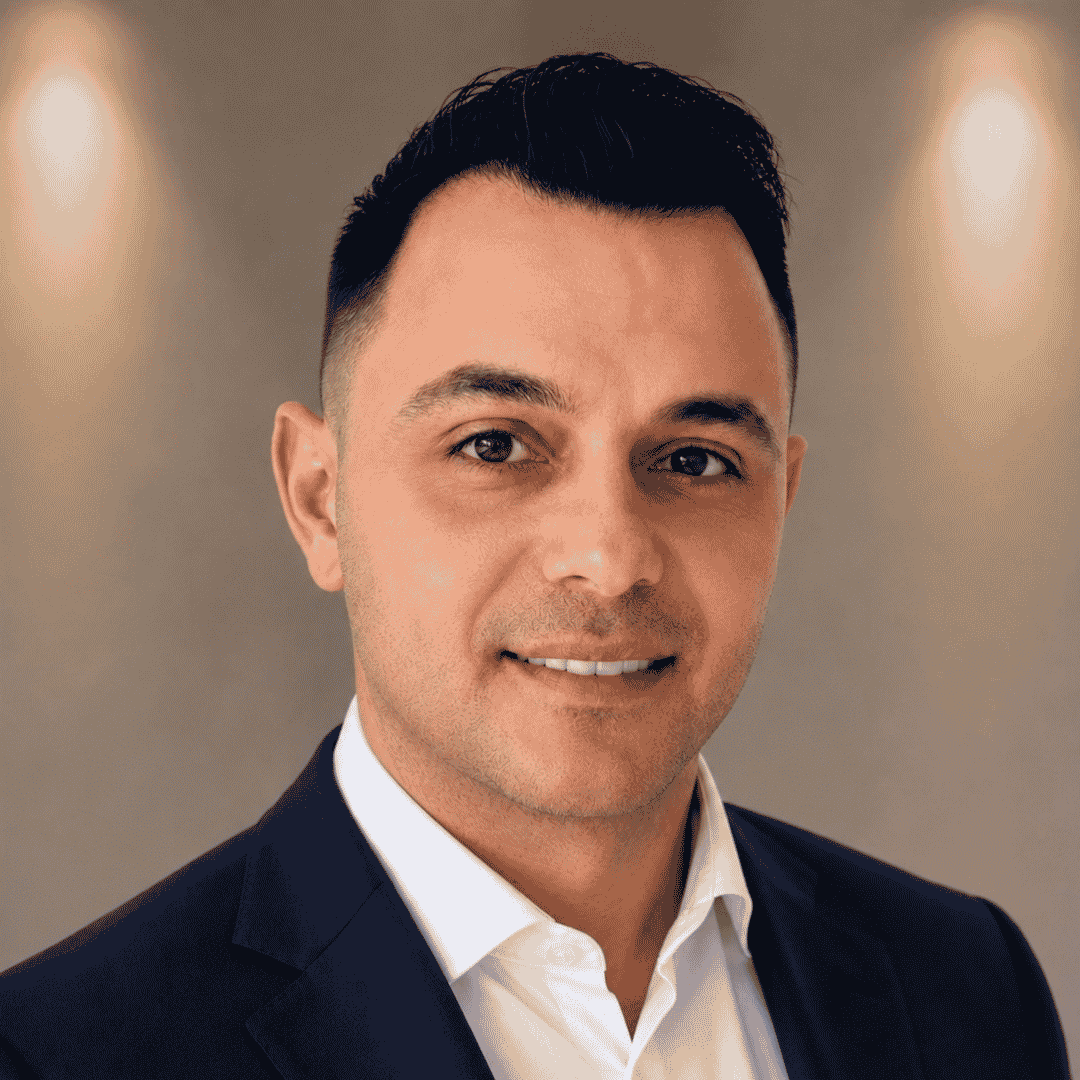


Who is Alex Tsilipanos and why did he move from Interactive Brokers to Perpetuals.com? (00:00)
[00:00] Delphine Forma: Welcome to the Compliance Champions series. I'm Delphine, Head of Policy Europe and APAC at Solidus Labs, the founder of the Crypto Compliance and Legal Telegram Group, and your host. For today's session, I have the pleasure to be joined by Alex Tsilipanos, Head of Market Surveillance at Perpetuals.com. Alex, I am so happy to have you today.
[00:26] Alex Tsilipanos: Hey Delphine, it's great to be here, and I'm looking forward to the discussion.
[00:31] Delphine Forma: Me too. Can you please start with an introduction about yourself and share your work at Perpetuals.com?
[00:40] Alex Tsilipanos: Yes, sure. I'm currently the Head of Market Surveillance for the MTF at Perpetuals, where I'm responsible for developing and overseeing the market surveillance framework for a regulated trading venue. My role involves monitoring orders and trading activity across the venue, designing various controls, investigating potentially abusive behavior and ensuring that any issues are escalated accordingly. Because the business is expanding into new products and services, an important part of my role is making sure that effective surveillance and compliance controls are built into each product from the launch stage.
I have been with Perpetuals for approximately one year, and before joining the group, I spent around four years as the Head of Trade Surveillance at Interactive Brokers in Dublin. That was a highly demanding role because of the scale of the business, the volume of trading activity and the broad range of products and markets that had to be monitored. My academic background is in both business and law, with a particular focus on financial regulation, AML and compliance.
[02:07] Delphine Forma: Wow, that sounds really interesting, and I'm really happy to have such an expert on the podcast today to talk about market surveillance. You mentioned you spent years at Interactive Brokers and have joined Perpetuals, where you are helping to build and develop the market surveillance program. What made you take that leap from Interactive Brokers to Perpetuals?
[02:33] Alex Tsilipanos: What attracted me was a combination of things: the people, the business plan and the opportunity to build something. The executive team has a lot of experience across financial markets, regulation and digital assets, and I had confidence in the business plan. There was also a very ambitious roadmap with some interesting ideas around new products and market infrastructure. It was also clear that compliance and market surveillance were being treated as a priority from the beginning. The company was specifically looking for experienced people in these areas so we could implement proper controls and governance into the business from the design stage.
Coming from Interactive Brokers, where I had worked in a very mature surveillance environment, the opportunity here was quite different. Instead of mainly operating and improving an established framework, I could help shape the surveillance architecture and how those controls can evolve as new products are introduced. Some of the products we're working with, or are planning to work with, combine traditional market abuse risks with newer characteristics, such as the MiCA introduction and different liquidity profiles.
What is Perpetuals.com and why launch a regulated MTF in Europe? (03:52)
[03:52] Delphine Forma: Wow, that sounds really, really good, and I perfectly understand. I was in the same boat. Something you mentioned that is really important is compliance being treated as a priority. As compliance professionals, that's something we care a lot about, and it must be so exciting to be able to shape the surveillance architecture from scratch. What would be interesting is if you can tell us a little bit more about what Perpetuals is actually doing. What is the business model, and why did you choose to launch a regulated MTF? Because that's very original.
[04:30] Alex Tsilipanos: Yes, sure. And I agree with your comments; I know you have experience with this. With the new challenges of the MiCA introduction, a lot of things are going on right now, but it's definitely exciting.
Regarding Perpetuals: Perpetuals is a financial technology business focused on both traditional finance and digital assets. We currently operate a fully regulated European MTF based in Cyprus, together with permissions for execution of orders on behalf of clients. We have also recently received our MiCA license, which is great news. The MTF is currently focused on perpetual futures, but the long-term roadmap is to significantly expand the range of products available on the venue. An MTF, for those who don't know, is an electronic financial trading platform that connects buyers and sellers of securities, acting as an alternative to a traditional stock exchange.
One of the most important aspects of the MTF is that members are accessing a regulated European trading venue and trading financial instruments within the MiFID and MAR framework. That means we operate under defined trading rules, which can be attractive to members and institutions who are looking for more transparency. On the tech side, the infrastructure is developed by the Perpetuals.com group. That technology covers areas such as trading, settlement and risk management, and gives us the ability to build and support a broader range of financial products. The roadmap is not limited to perpetuals; we're also looking into expanding into areas such as tokenized real-world assets (RWAs), structured products and other products. From the MTF perspective, the objective is really to combine a regulated European trading venue with modern technology and gradually increase the product offering as the business develops.
[06:39] Delphine Forma: That sounds really exciting, also from a compliance point of view, because the more products are brought to market, the more you need to think about the controls from scratch as a compliance officer, especially one specialized in markets. It always makes it very interesting and never boring, I guess.
[07:00] Alex Tsilipanos: Exactly. It's definitely a very interesting role.
What does a Head of Market Surveillance actually do? (07:05)
[07:05] Delphine Forma: I will be looking forward to seeing what's going to happen in the next few months. But let's get into the topic of the day. Trade surveillance is actually a really niche area. What does a Head of Market Surveillance actually do, and what made you so passionate about it?
[07:27] Alex Tsilipanos: Trade surveillance is the internal process where financial firms monitor their clients' trading activities to detect and prevent market abuse. The regulatory framework for the EU is called MAR, but the general MiFID framework is also applicable. Market surveillance generally monitors the health and overall stability of the entire trading venue. At Perpetuals, we're still relatively close to the soft launch stage, with a broader business strategy being implemented, and several projects are progressing in parallel as a result. My current role involves a lot of framework development, preparation and automation for future products.
In addition to the day-to-day monitoring of the venue, other responsibilities of a market surveillance manager, especially in a more mature venue, are managing the daily priorities, recent regulatory updates and urgent cases. The first focus is generally on open investigations, potentially suspicious activity and any matters that could require the submission of a STOR, or suspicious transaction and order report. These cases take priority because they are often time-sensitive and may involve regulatory reporting obligations. The manager also reviews outstanding surveillance alerts, delegates investigations and monitors the progress and quality of the work. Depending on the day, there may also be requests for information from regulators, exchanges or other authorities that require detailed analysis and carefully prepared responses.
From my side, I have always found trade surveillance fascinating because it combines trading knowledge with being able to translate complex regulation into technical specs and make decisions based on the regulatory guidance. You could say it is maybe the most trading-oriented role in compliance, and some people might find that interesting.
[09:36] Delphine Forma: Yes, totally. This is something really important to highlight. I personally believe that if you don't understand trading, or if you haven't even traded yourself, it would be very hard for you to work in market surveillance. This is why I think it's such a niche topic in compliance, as you highlight. You really need to understand how it works, because if you do not, I don't see how you can catch any bad behavior. The line is so thin between what is bad, what is good, what could be potentially suspicious and what is not. And your background perfectly fits that, right? You studied business and regulation, so I think it's a perfect match.
[10:20] Alex Tsilipanos: Yes, exactly. It's a steep learning curve. For people who start in trade surveillance, there's usually a few months of training initially. In order to catch trading patterns, you first need to know how to spot them and understand them. So there's a steep learning curve, but it's definitely worth it, and you get experience across a number of different departments.
How is crypto market surveillance under MiCA different from MAR? (10:44)
[10:44] Delphine Forma: That sounds really fascinating. Something else I'm really curious about: with your background, you've actually built surveillance programs in both traditional finance and crypto. What would you say are the biggest differences?
[11:04] Alex Tsilipanos: We have recently received a MiCA license, and we are currently in the design stage of our crypto offering. MiCA took effect quite recently, so the details and implementation in trade surveillance systems are probably still being expanded. Even though everyone knew it was coming, now that it's live, the systems are probably still being expanded. As you know, MiCA applies mainly to crypto assets that are not financial instruments in the traditional sense. Its market abuse rules use concepts similar to MAR, but adapt them to crypto-specific risks such as token concentration and cross-platform manipulation. It extends beyond the order book to the functioning of the DLT, the distributed ledger technology, for tokenized products, and differentiates between on-chain and off-chain activity in smart contracts.
A lot of the risk behaviors and typologies are very similar, but expanded with the unique suspicious behaviors of crypto. Generally, MAR might feel a little more detailed due to the delegated acts we have, the Q&A guidance and nearly a decade of supervisory practice. But the core requirements are actually very similar between MiCA and MAR.
[12:25] Delphine Forma: Yes, I totally agree. We see very similar requirements. MiCA is like a little mini MiFID, and I think Title VI of MiCA is minimal. But I would agree with you that it's still so young. Even though Title VI actually entered into force in January last year, there has been very little guidance. I think the regulators have been very much focused on authorization and not at all on enforcement. I believe, or at least I hope, we will see more guidance and guidelines, and that it will pick up in the next year.
[13:08] Alex Tsilipanos: Today was one of the first fines under MiCA, so things are definitely starting to evolve.
[13:16] Delphine Forma: Exactly. Regulators are actually using Solidus Labs to surveil the crypto market, so I'm expecting to see some enforcement action in the next six months. Just a little teaser. But people often say to just apply traditional finance surveillance to crypto. Why is that not working, or why would it work? I'm not sure; you tell me.
[13:45] Alex Tsilipanos: I would say it works to a significant extent, but it's not enough on its own. A lot of the core market abuse concepts are exactly the same. If somebody is placing orders that they do not genuinely intend to execute in order to create a misleading impression of volume, the underlying behavior is market abuse, whether the instrument is a share or a crypto asset. The same applies to other behaviors like wash trading and pump and dump. So the methodologies developed in traditional finance are very valuable. Crypto markets are a little more fragmented. Activity can span multiple venues, and it can also take place on-chain. So you may also need to understand wallet movements, wallet addresses and token concentration. The MiCA technical standards recognize a lot of that.
In my opinion, the best strategy is to start with the lessons learned from traditional markets. There is no reason to reinvent surveillance, but you then need to expand the framework for the new technology and the requirements specific to the new product types.
How do you build a market surveillance framework from scratch? (14:53)
[14:53] Delphine Forma: Totally agree. When you are building a surveillance framework from scratch, where do you actually start? Can you walk us through the different steps to build that framework?
[15:10] Alex Tsilipanos: Sure. For those who are starting a new business, a new venue or a broker, you need to start by understanding the business and the risks. The first step is a detailed market abuse risk assessment based on the business plan. You look at what products you are offering, how they trade and the general trading conditions. From that analysis, you can identify the behaviors you need to detect and map those risks against the general market abuse typologies. You also need to be able to review the full lifecycle of the order. This is where an experienced tech support and developer team becomes crucial, because the surveillance function is only as good as the underlying data and infrastructure. Building and testing the alerts is definitely another important challenge.
There are different testing methodologies, and especially when you start, you need to take a risk-based approach. Finally, it's very important for market surveillance to have clear procedures and policies around investigation and escalation, and proper governance and rules around the whole process. So building and expanding surveillance is really a combination of understanding the risks, having the right data and converting those into effective alerts.
[16:38] Delphine Forma: Indeed. You mentioned several really good points, like always starting with the risk assessment, which works for any type of risk in compliance. And also the data part. It's so key to make sure that you have the right data, that it feeds correctly into your system, and that all the data is actually there, right?
[17:02] Alex Tsilipanos: Yes, exactly. That's why experienced tech support that understands a little bit of the regulation and the trading aspect can help a lot with the design of any market surveillance system.
What are the main market abuse risks in crypto perpetual futures? (17:15)
[17:15] Delphine Forma: Indeed. And you mentioned risk. What do you think are the main market abuse risks you focus on when monitoring crypto perpetuals?
[17:28] Alex Tsilipanos: Perpetual futures are derivatives traded on an MTF, so they fall within the MAR framework. That means many of the traditional market abuse types are relevant. I can name a few: spoofing and layering, wash trading, or pump and dump. For example, pump and dump is relevant particularly in less liquid crypto products, where small trading activity can have a significant impact on the price. Pump and dump has become quite popular through social media lately, with many famous people also being caught in them. When the price action is paired with coordinated hype campaigns on social platforms, retail traders are usually the ones left holding the bag in the end. Some of these schemes became so popular that they might involve thousands of victims, even for a single scheme.
With crypto perpetuals, you also need to consider the relationship between the derivatives and the underlying crypto assets, and consider cross-market manipulation. So that's a high-level overview of some specific risks for perpetuals.
[18:40] Delphine Forma: You mentioned pump and dumps, and indeed, this is a very fancy one, especially in crypto, and it never stops. But something else really interesting about perpetual futures is that they also introduce very unique risks, such as funding rate and insurance fund manipulation. As you may know, when I was working at BitMEX, these were the kinds of typologies we noticed were very specific to perpetual futures. Can you explain how this works and how a trading venue can detect them?
[19:18] Alex Tsilipanos: Yes, sure. We approach this risk through several layers of control. First, the funding rate calculation should not depend on a single snapshot of the order book or the venue's last traded price. It should be linked to an external reference price and use an impact price that considers the available liquidity across several levels of the order book. The calculation itself also contains some stabilizing mechanisms: the premium is calculated repeatedly through the funding period and averaged over time. This is like a pre-trade control, and it makes it more difficult for someone to influence the final rate through one transaction or a short burst of activity. We also have other controls that limit how much the premium adjustment affects the funding rate during a single period. We also analyze who benefits from the payment.
For example, repeated profitability or a unique pattern could be an important surveillance indicator. So the funding methodology and the quality of the reference price all need to be assessed together; I wouldn't look at it in isolation. The insurance funds you mentioned are slightly different. They are one example of the broader risk management controls that perpetual venues use to manage losses arising from liquidations, and different venues can use different structures and loss allocation controls. They are primarily a risk management system rather than a surveillance mechanism. The market surveillance concern is whether somebody has tried to intentionally create or exploit a bad situation around liquidations, and we have various tools that try to prevent that situation in the first place.
[21:12] Delphine Forma: Wow, this is fascinating. Another challenge that is unique to crypto is that manipulation does not necessarily happen on the venue where the product is traded. If someone manipulates the underlying spot market, for instance, to influence the price of a perpetual, how would you detect that?
[21:37] Alex Tsilipanos: A perpetual future normally relies on an external reference price or index price. So if somebody would benefit from a large position in the perpetual, they might try to influence one of the underlying spot markets instead of directly manipulating the perpetual order book. From a surveillance perspective, we need to monitor the relationship between the two, the underlying and the perpetual, and identify any unusual changes across the markets. There are various pre-trade controls and safety settings for this. Where possible, external data can also be used to understand whether the movement occurred across the wider market or was concentrated on a particular venue. It is important to clarify that cross-product and cross-venue manipulation is not unique to crypto.
In traditional markets, you see similar risks, where someone may trade the underlying in order to benefit from a position in an option, a barrier, a CFD or any other derivative. These relationships between the underlying and the derivative are an important part of surveillance. I have seen it many times in my career, including very coordinated types of manipulation. What can be unique in crypto is maybe the number of venues and the 24-hour trading environment. So we're looking at familiar concepts, but definitely with some additional complexities.
[23:15] Delphine Forma: Indeed. And you mentioned that you have pre-trade controls. Can you explain a little bit more what those controls would look like?
[23:26] Alex Tsilipanos: For example, the funding rates you mentioned, with the real-time averaging. There are other mechanisms, like a clamp price: things that make it much harder for someone to take advantage of a single vulnerability in the system. You always try to make the venue safer for other people. And these types of pre-trade controls can also evolve as the typologies of market abuse evolve.
[24:01] Delphine Forma: Yes, indeed. I think this is also common to other compliance fields, where your controls evolve with your risks and with the new typologies you can detect in the market. Something else interesting to discuss is liquidation, especially in crypto. We've seen in the past that liquidations can move markets. How do you distinguish genuine market activity from someone deliberately trying to trigger liquidations?
[24:37] Alex Tsilipanos: If someone is trying to abuse the market through liquidations, this is probably part of sending misleading signals to the market, so it is covered in MAR and MiCA. The timing is potentially important in that case. If unusual trading activity occurs immediately before a liquidation event, it might justify closer review. A review of the beneficial owners who benefited can also indicate whether something potentially suspicious is going on. If the same or a related account contributed to a price movement and also benefited from the liquidation, that would be another important indicator. A quick reversal in direction after the liquidation can also signal a reason to review. So the focus is really on the order book behavior, the timing and the economic benefit around the liquidation. It helps a lot if you have some external market data to help you in these cases.
[25:39] Delphine Forma: Really interesting. To conclude the section on risks and red flags, do you have any advice for listeners working in market surveillance about how best to spot bad behavior?
[25:56] Alex Tsilipanos: Tips and best practices for spotting bad behavior? I think this comes down, again, to a proper market abuse risk assessment. You try to list the behaviors you want to capture, then have alerts that you believe capture those behaviors, and do a lot of testing. Play around with the thresholds; there are various testing methods that can be used. And use a risk-based approach without risking losing any true positive alerts.
How do you choose surveillance alerts and run a good investigation? (26:35)
[26:35] Delphine Forma: Yes, and I guess this also comes down to having a strong surveillance program in place. When it comes to crypto, how do you combine surveilling on-chain activity with off-chain trading, and also monitoring external events, all in one surveillance framework? That sounds quite complex.
[26:59] Alex Tsilipanos: I think the key is to bring all of these different sources together around the same investigation, looking at the combined total volumes and price reaction. You start from your own order book and trade data, try to understand the activity, and then use outside sources where needed to get a clearer picture. MiCA reflects this broader approach as well. Its technical standards refer to monitoring activity both on-chain and off-chain, and to considering relevant public information from the DLT. It is obviously not realistic to have every possible data source in one system from day one. The point is to make sure that when an alert or investigation requires it, you can bring in the relevant additional information and build a more complete picture.
[27:55] Delphine Forma: Indeed. And when it comes to alerts, how do you decide which alerts are worth building? And how do you avoid creating thousands of alerts that investigators simply cannot look at and are just drowning under?
[28:14] Alex Tsilipanos: I believe this should be part of the trade surveillance system design: build on your risk assessment, and build the alerts around the behaviors that are actually relevant to you and your trading model. The objective is to identify the scenarios that present high risk for you and where you have the data to monitor them effectively. The more sophisticated trade surveillance systems can potentially combine multiple abuse behaviors into one alert type through various scoring thresholds. The size and capacity of the team, the resources and the market conditions are all aspects that contribute to your own risk-based approach. So I would say a good surveillance system is one that produces the most relevant and meaningful alerts and gives analysts enough information to make a meaningful assessment.
[29:12] Delphine Forma: Yes, indeed. Again, it all comes down to the risk assessment and the typologies you have identified. But I think what is also important on the alert side is being able to tailor alerts depending on client type and on assets. That's also very relevant, right?
[29:34] Alex Tsilipanos: Yes, exactly. It all depends on each venue, each broker and their own unique risks.
[29:43] Delphine Forma: And when you have alerts, obviously you need to investigate. What does a good market surveillance investigation look like? And what evidence are you trying to build before escalating a case?
[29:57] Alex Tsilipanos: I believe best practice starts with having clear policies and procedures. The surveillance team should understand which risks apply to each product, what information must be reviewed, and how cases should be documented and reported. Data quality is obviously essential. You want to understand exactly what happened before and after the alert. That means looking at the full order lifecycle, the trade history, the various related factors and the general economic rationale behind the activity. In many cases, intent cannot be observed directly, and you need to look at the wider context. For crypto-related products, you might need to combine order and trade data with account information and wallet activity. But it's important to establish who placed the orders, who controlled the account and who benefited.
Investigations also often require close cooperation between market surveillance, AML and possibly tech teams. A case may begin as suspected market manipulation but later show other financial crime concerns. So before you escalate a case, you're generally trying to establish a clear behavior pattern: what behavior occurred, who was involved, who benefited, and whether the overall pattern creates a reasonable suspicion of market abuse. That's what you're looking for before escalating a case. One more important point is that you need a clear audit trail. Effective surveillance is not only about identifying the activity, but also about being able to demonstrate that you investigated it consistently and reached a well-supported conclusion.
[31:53] Delphine Forma: Indeed. Oh my God, you mentioned so many good points in your answer. Governance is key, documentation, really looking at having the full picture. Something that got my attention is that you mentioned cooperation between the AML and trade surveillance teams. This is so true, and you are probably one of my first guests to really highlight that a behavior can start in market surveillance but then have implications on the AML side, and vice versa. I think this is so important, and a lot of regulators, like the UK FCA, I think, have actually issued reports on that.
I always emphasize that if you have one tool where you can see your trade surveillance alerts and your AML transaction monitoring alerts, it's very powerful, because it gives you the full picture of what is happening and makes sure you don't miss any behavior.
[32:49] Alex Tsilipanos: Yes, I do believe these two teams, market surveillance and AML, have very similar responsibilities. It's just that market surveillance focuses on the trading, while AML focuses on the transactions and the financial crime aspect. So I think escalations from market surveillance should ideally pass through AML as well, at least the suspicious cases.
How do you monitor illiquid products without excessive false positives? (33:14)
[33:14] Delphine Forma: Yes, exactly. As I always say, when I was a compliance officer, I wanted a full view of my customer. When I investigated an alert, I wanted to go to the customer profile and see if there were alerts from other departments. I was in AML, and I wanted to see whether there had been a sanctions alert, a fraud alert or a market surveillance alert before, so that it gives you a real picture of what happened with the customer. Something else interesting when it comes to market surveillance: how do you protect illiquid products without generating excessive false positives?
[33:59] Alex Tsilipanos: Illiquid products are generally more vulnerable to manipulation because a small order can have a disproportionate effect on the market price and the appearance of supply or demand. So before launching a product, all of this needs to be considered, along with the reliability of the underlying reference price and the expected level of liquidity. Once the product is trading, we can apply tighter surveillance to illiquid markets. You consider factors like the size of the order and the client's share of total market activity as a percentage. So you need to review when a significant order is placed in an illiquid market. We would also review any large orders that are repeatedly placed and cancelled, or coordinated trading between related accounts.
What this means is that when a trader, or a connected group of traders, represents a significant share of the order book, this could be something that needs to be investigated. You can also do checks every few months with alert tuning, testing and periodic reviews, where you look at the false positives and the delta you have, identify which conditions are producing unnecessary alerts, and improve your whole system. In addition, a venue may also have interventional controls. For extreme cases, you can even suspend the product, or you can place volatility controls and order size limits.
[35:44] Delphine Forma: Really, really interesting. Thank you for the tips. For listeners, those are really good tips for how to manage illiquid products.
[35:55] Alex Tsilipanos: It's always a little bit more complicated when the product is illiquid.
[35:57] Delphine Forma: Yes, exactly. For everything, unfortunately. And especially when we see more real-world assets coming to market, that might make things a little bit more complicated, I believe.
[36:18] Alex Tsilipanos: Yes, exactly. It's something we're working on. We're looking at all the challenges around it, but hopefully it is becoming more popular, and I think liquidity will slowly become more available in the market, even for tokenized products.
What is the future of market surveillance, and how do you start a career in it? (36:36)
[36:36] Delphine Forma: Exactly. We're arriving at the end of this podcast, and I would like to know what you think the future of market surveillance will be over the next five years. How do you think it will evolve? What do you think will change? Here we can talk about what we just discussed, the RWAs.
[37:00] Alex Tsilipanos: Based on the complexities we talked about, I believe market manipulation has become a bit more sophisticated. Activity can span several venues or product types. Traders may also target illiquid periods, as we just discussed, where even relatively small orders can have a larger effect on the order book. Even spoofing and layering have become less straightforward to catch. A trader may place multiple orders on one side of the market to create a misleading impression of supply, execute on the opposite side after the market moves, and then cancel or move the original orders. More sophisticated cases can involve several accounts, different order sizes and activity over longer periods to make the pattern less obvious. Identifying the true beneficial owner can also be difficult.
Another point we've seen recently is that wider networks of trading rings are becoming more common. When the activity is spread across multiple people, each individual account can appear relatively normal when reviewed in isolation. It is important to look at the wider strategy and understand the flow.
[38:25] Delphine Forma: And what role do you think AI will play in the future? Do you think AI will help you? I'm especially thinking about gathering all the data and feeding in more data when you look at behaviors, and especially the trading rings you mentioned, which I think could be quite difficult to identify if you don't have the right tools in place.
[38:55] Alex Tsilipanos: Yes, exactly. It's a tricky topic for trade surveillance because you need proper underlying data. Generally, I think AI and machine learning will play an increasingly important role in trade surveillance, particularly in identifying patterns and improving efficiency. Traditional trade surveillance systems are often very rules-based: you define a scenario, set thresholds and generate an alert when those conditions are met. AI can potentially help identify more complex patterns that may not fit so well within a predefined rule. Another area is probably support. AI can help analysts bring together large amounts of data, summarize the activity and potentially highlight activity that might be missed during a manual review. But it's very important to know that AI is only effective when it's supported by complete and well-structured underlying data. Poor-quality data will inevitably produce poor-quality outcomes.
And you might risk, for example, missing some true positive alerts. So human judgment will remain essential. I believe the opportunity now is moving from a surveillance system that simply generates alerts towards a system that helps analysts understand and prioritize suspicious behavior more efficiently, while reducing unnecessary false positives.
[40:29] Delphine Forma: Exactly. And this is actually what we do at Solidus Labs. We really help our customers identify patterns of behavior, rather than relying on very static rules, which I think is really important. Finally, what advice would you give to someone looking to build a career in market surveillance?
[40:51] Alex Tsilipanos: First of all, I would say that we do need more people in market surveillance. The best starting point is to understand the markets properly. It is much easier when you understand how products trade, how orders behave and how traders think. Regulation is also obviously important, so have some understanding of MAR, MiFID and how regulations work. The strongest surveillance professionals usually sit somewhere between trading, regulation and technology, as we discussed. But when you're just starting, an important skill is probably curiosity. A good investigator should always ask why something happened, whether the behavior makes economic sense and whether there is a wider pattern that is not immediately obvious. And finally, try to get some practical exposure where you can, and review some real-world cases.
There are many regulatory enforcement cases you can learn from about how products behave. I also think that compliance, market surveillance and AML can each give you an important foundation. In many firms, there may be opportunities to move across departments internally, and I would definitely encourage people to take those opportunities when they appear.
[42:22] Delphine Forma: I do agree. I think this is great advice: being able, in compliance, to move between different teams to understand different risks, and in the end really get the full picture of the customer, which enables you to better detect financial crime. This is really good advice. But Alex, none of my guests can escape my last question: are you following any fashion trends? And I'm talking about clothes, not market surveillance.
[42:57] Alex Tsilipanos: I'm probably not the best person to ask. But after living in Dublin for many years and now spending most of my time in Cyprus, I have definitely had to update the wardrobe. In Dublin, you need layers and have to be prepared for all four seasons in one day. In Cyprus, you just try to survive while looking a little bit professional. I would say linen is my new favorite material.
[43:28] Delphine Forma: You know what, I can totally relate. In Hong Kong it's the same; it's very hard, so you need to change your wardrobe too. Alex, thank you so much for all your insights. It was really great to have you today.
[43:46] Alex Tsilipanos: Thank you very much for having me. I really enjoyed the discussion.
[43:51] Delphine Forma: Thank you.