MARC readiness: the UK Market Abuse Regime for Cryptoassets

On your MARC.
Get Set. Go.

Everything UK trading platforms and intermediaries need to know to be MARC-ready, and how Solidus HALO gets you there.

Download the guide
Book your MARC readiness assessment

MARC key dates and the FCA authorisation deadline

Complete
30 Jun 2026
Final rules published (PS26/9)
Open now
30 Sep 2026
FCA authorisation gateway opens
Complete
28 Feb 2027
Gateway closes
Complete
25 Oct 2027
MARC goes live
Apply by 28 February 2027 to be authorised in time.
Firms that intend to operate when the regime goes live should apply by 28 February 2027.
Firms that apply later may be limited to existing customers until they are authorised. Firms that don't apply must wind down their UK cryptoasset business altogether.
Out now

Your Guide to
MARC Readiness

Inside the guide:
  • Typology map
    MARC's prohibited behaviours, mapped to HALO typologies.
  • Your MARC checklist
    Monitoring, detection, disruption, governance and duties. Test your controls before you apply.
  • Onchain monitoring
    What every UK QCATP must detect, and what large QCATPs must monitor onchain.
  • What HALO solves
    Cross on- and offchain surveillance, seven-year data retention and rapid deployment, so you're live and tested before the gateway closes.
Download the guide
Who's in scope

Who does MARC apply to?

Anyone trading UK-listed cryptoassets or related instruments. The prohibitions cover qualifying cryptoassets admitted to trading, or subject to an application for admission, on a UK qualifying cryptoasset trading platform (UK QCATP).
Every platform
Obligations for all UK QCATPs
Prevent, detect and disrupt market abuse. Analyse every order and transaction, and detect material and persistent price dislocations against markets that matter for price formation, which can include DEX pools (CRYPTO 4.7.11).
‍
£10m+ group revenue
Extra obligations for large UK QCATPs
Large means £10m or more average annual revenue over three years, across the whole group and all jurisdictions. Large UK QCATPs must also monitor relevant wallets onchain and assess whether that activity is linked to abuse on the platform, or is market abuse in itself. The FCA suggests looking at wallet interactions, token flows and transaction patterns (CRYPTO 4.7.20 to 4.7.22). They must also share information on suspected abuse with other large UK QCATPs (CRYPTO 4.9.3 to 4.9.15).
Brokers, dealers, arrangers
Obligations for intermediaries
Firms that deal as principal, deal as agent or arrange deals must keep effective systems to prevent, detect and disrupt market abuse, and notify the platform operator, not the FCA, of suspicious orders without unnecessary delay (regulation 30).
The requirements

What does MARC require?

The core surveillance and governance duties under MARC, and who they apply to.
Prevent, detect and disrupt insider dealing, unlawful disclosure and market manipulation, including attempts
All firms
Regs 19, 22, 24 and 28 · CRYPTO 4.4 to 4.6
Replay the order book and alert in line with predefined parameters
All firms
CRYPTO 4.7.11 and 4.8.11
Detect material and persistent price dislocations, including against DEX pools
All UK QCATPs
CRYPTO 4.7.11 (5)
Share information with other large UK QCATPs
Large UK QCATPs
CRYPTO 4.9.3 to 4.9.15
Keep records for at least five years
All firms
CRYPTO 4.7.32 and 4.8.38
Analyse every order placed, modified, cancelled or rejected, and every transaction executed
All firms
CRYPTO 4.7.11 and 4.8.11
Monitor internal and external communications, including social media
All firms
CRYPTO 4.7.11 and 4.8.11
Monitor flagged wallets, and wallets linked to them, onchain
Large UK QCATPs
CRYPTO 4.7.20 to 4.7.22
Notify the platform operator of suspicious orders and trades
Intermediaries
Regulation 30(3)
HALO by solidus labs

How HALO gets you MARC-ready

One platform for trade surveillance and transaction monitoring, on- and offchain,
built for what the FCA will ask you to show.
See every order and trade, on- and offchain
Real-time and T+1 alerts, order book replay, parameter-based alerting and price dislocation detection across venues and DEX pools, in one platform.
Answers:
CRYPTO 4.7.11 and 4.8.11
Monitor the wallets that matter
Swap-level onchain data across 30+ chains is already in your environment before a wallet is flagged, so you can look back the moment one is. Onchain swaps and platform trades sit on one timeline.
Answers:
CRYPTO 4.7.20 to 4.7.22
Evidence everything for the FCA
Case management, exportable disclosure evidence for other large platforms, and a full audit trail with seven-year retention, beyond the five years MARC requires.
Answers:
CRYPTO 4.9.3 to 4.9.15, 4.7.32 and 4.8.38
Be live before 28 February 2027
Deploy in weeks. Solidus Professional Services support implementation, tuning, training and your annual review.
Answers:
The FCA gateway deadline
Applying with the FCA?
The application form asks trading platforms to describe their surveillance systems and the rules they apply. Use HALO's typology map to show yours.
Book your MARC readiness assessment
MARC resources

MARC insights from the FCA and industry

Event recording
DACOM UK: MARC, 24 hours before the final rules
London · 29 June 2026
Watch the full event recording
“
The question for us has always been not so much whether market abuse standards are compatible with crypto asset innovation, but can crypto asset markets genuinely scale without them? We don’t think they will. Good market abuse controls are genuinely a competitive advantage
Rupert Harrison, Manager, Wholesale Cryptoasset Policy, FCA
Podcast
Ready, Willing and Organised: Inside the FCA’s New Crypto Regime
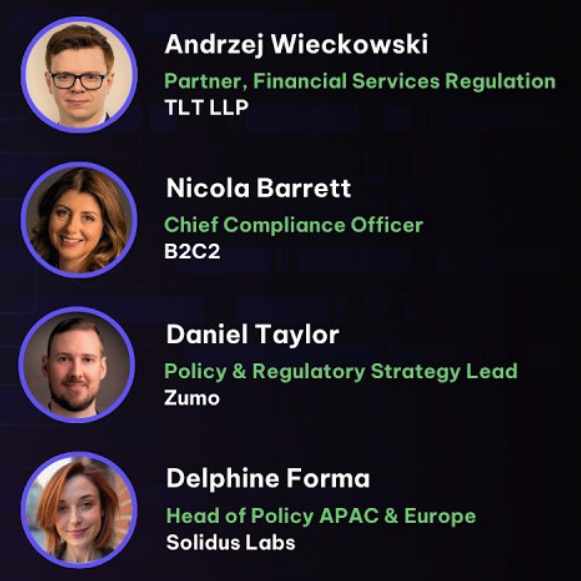
Join Delphine Forma, Head of Policy Europe at Solidus Labs, & Val Smith, Head of Payments and Digital Assets Authorisations at the FCA
Listen now
An arrow Icon
Webinar
UK MARC: From Market Abuse Rules to Effective Surveillance
As crypto asset markets mature and regulatory scrutiny increases, how can firms effectively identify, prevent and respond to market abuse?
Watch now
An arrow Icon

FAQ

What is MARC?

MARC is the UK's Market Abuse Regime for Cryptoassets. It works in three layers.

The law: the Financial Services and Markets Act 2000 (Cryptoassets) Regulations 2026, made by HM Treasury. The rules: the Cryptoassets (Market Abuse) Instrument 2026, which inserts Chapter 4 into the FCA's Cryptoassets Sourcebook (CRYPTO 4). The explanation: FCA Policy Statement PS26/9.

When does MARC go live?

MARC goes live on 25 October 2027.

The FCA published final rules in PS26/9 on 30 June 2026. The FCA authorisation gateway opened on 30 September 2026 and closes on 28 February 2027.

What is the deadline to apply for FCA cryptoasset authorisation?

28 February 2027. Applying by then is the way to be authorised in time for go-live on 25 October 2027. Firms that apply later take the risk of not being authorised in time, and won't be able to onboard new customers from 25 October 2027 until they are approved.

Who does MARC apply to?

Anyone trading UK-listed cryptoassets or related instruments. The prohibitions cover qualifying cryptoassets admitted to trading, or subject to an application for admission, on a UK qualifying cryptoasset trading platform, and related instruments whose prices depend on or affect those cryptoassets. For market manipulation, it is immaterial where the activities are carried out. The systems duty applies to authorised firms that operate a qualifying cryptoasset trading platform, and to firms that deal as principal, deal as agent or arrange deals in qualifying cryptoassets or related instruments (regulation 30(1)).

What is a large UK QCATP?

A UK QCATP averaging £10m or more in annual revenue over the previous three years. The FCA has clarified that the threshold applies to total group revenue across all activities and jurisdictions, so a global exchange with a small UK book can still be large. Large UK QCATPs carry extra obligations: onchain monitoring of relevant wallets (CRYPTO 4.7.20 to 4.7.22) and information sharing with other large UK QCATPs (CRYPTO 4.9.3 to 4.9.15).

Does MARC require onchain monitoring?

In two tiers. Every UK QCATP, large or small, must detect material and persistent price dislocations against markets that matter for price formation, which for many tokens can include DEX pools (CRYPTO 4.7.11 (5)). Large UK QCATPs go further: they must monitor onchain the wallets their controls flag, and the wallets linked to them (CRYPTO 4.7.20 to 4.7.22).

What minimum surveillance capabilities does MARC require?

CRYPTO 4.7.11 and 4.8.11 require analysis of each and every transaction executed and order placed, modified, cancelled or rejected. Firms must also replay the order book, produce alerts in line with predefined parameters, and monitor internal and external communications, such as social media. UK QCATPs must also detect material and persistent price dislocations against other markets. Systems must be appropriate and proportionate to the firm's business (CRYPTO 4.7.9 and 4.8.9).

Are KYT and blockchain analytics tools enough for MARC?

No. KYT and blockchain analytics tools tell you who controls a wallet and whether it touched an illicit party. CRYPTO 4.7.22 asks a different question: did that wallet's trading move a price, fake volume, or trade ahead of inside information? That takes market surveillance built for onchain market structure: the AMM pool and the DEX behind each swap.

How does Solidus HALO help firms become MARC-ready?

HALO is a multidimensional trade surveillance and transaction monitoring platform. It maps MARC's prohibited behaviours to HALO typologies, delivers cross on- and offchain trade surveillance, and keeps a full audit trail with seven-year data retention, ready for FCA review and your accountable Senior Managers. Solidus Professional Services support implementation, tuning, training and your annual review.

Who do intermediaries and dealers report suspicious activity to under MARC?

The UK QCATP, not the FCA. Under regulation 30(3), firms dealing as principal, dealing as agent or arranging deals must notify the platform operator without unnecessary delay. UK QCATPs must then receive and assess those notifications promptly and effectively (CRYPTO 4.7.5 (4)).

What behaviours does MARC prohibit?

Insider dealing (reg 22), unlawful disclosure of inside information (reg 24) and market manipulation (regs 19 and 28). CRYPTO 4.4 to 4.6 describes these behaviours, including spoofing, layering, wash trading, front-running, pump-and-dump and cornering the market.

Does MARC require intent to commit market abuse?

No. MARC is a civil regime only, and the Cryptoassets Regulations do not require the person to have intended to commit market abuse. FCA guidance indicates that firms which take all reasonable measures to prevent market abuse should not be deemed to have committed it when their employees do. Effective surveillance is how you evidence those measures.

How is MARC different from UK MAR?

MARC draws on UK MAR but is deliberately not a copy-out. It is adapted for crypto-specific features, including cryptoassets with no traditional issuer, decentralised assets and onchain activity. It also gives UK QCATPs, particularly large ones, greater responsibility for preventing, detecting and disrupting market abuse than UK MAR does.

Do large UK QCATPs have to monitor the whole blockchain?

No. The FCA narrowed the onchain duty after consultation (PS26/9). Large UK QCATPs must monitor wallets used for trading that their controls identify as a market abuse risk, plus any wallets reasonably identifiable as controlled by the same person or group of persons.

How long must firms keep records under MARC?

At least five years: CRYPTO 4.7.32 for UK QCATPs and CRYPTO 4.8.38 for intermediaries.

When can firms submit the FCA cryptoasset application form?

From 30 September 2026, when the gateway opens, through the FCA's online system. The gateway closes on 28 February 2027.

Do firms already authorised under FSMA need to apply?

Yes, through a variation of permission (VoP), which asks for the same crypto-specific information as a new application.

What does the FCA application form ask trading platforms about market abuse?

A market abuse detection and prevention framework: a framework overview, a detailed systems and controls document, and a description of the surveillance systems and the rules they apply. Large platforms must also show how they will meet their transparency duties and detect and report suspected market abuse.

What does the FCA application form ask intermediaries about market abuse?

A market abuse prevention attestation: intermediaries must have effective policies, arrangements, systems and procedures to prevent, detect and disrupt market abuse.

Which other application sections touch market abuse controls?

Seven. For trading platforms: the market making policy, the algorithmic trading policy, the matched principal trading policy, the conflicts of interest policy, and, for platforms that trade on their own account, the policies that keep that trading outside the platform. For intermediaries dealing as principal: managing conflicts between own-account trading and client orders. For most firms: the personal account dealing attestation, in line with CRYPTO 5.8.

Which MARC requirements does HALO cover?

Orders and transactions on- and offchain, real-time and post-event (T+1) alerts, order book replay, alerts in line with predefined parameters, price dislocation detection, case management and record keeping. HALO supplies the evidence for disruption, notifications, governance and training.

How does HALO monitor onchain activity?

HALO ingests onchain activity at the level of each swap and liquidity event across 30+ chains, including Ethereum, Solana, Base, Arbitrum, Optimism, Polygon, Avalanche, BNB Chain, Robinhood Chain, HyperCore and HyperEVM, and delivers it daily into your environment. The data is in place before any wallet is flagged, so a lookback is possible when one is. Onchain swaps and platform trades sit on one timeline, in one case.

How does HALO support information sharing between large UK QCATPs?

HALO exports the case evidence a disclosure needs, including the CRYPTO 4.9.10 items, whether the abuse happened on your platform, onchain, or both. Every finding states whether the behaviour took place on- or offchain, and onchain findings carry the transaction hash, block and wallet, so the receiving platform can check each transaction itself. Making and receiving disclosures is your process.

How does HALO cover wallet interactions, token flows and transaction patterns?

CRYPTO 4.7.23 says onchain monitoring may cover wallet interactions, token flows and transaction patterns, using blockchain analytics, wallet clustering and anomaly detection. HALO detects transaction patterns today, at the level of each swap and liquidity event.

Does HALO cover both trade surveillance and transaction monitoring?

Yes. Market abuse and financial crime rarely arrive alone. HALO covers misuse of information, price and market manipulation, and financial crime through markets, within a single cross on- and offchain platform.

How fast can HALO be deployed?

Within weeks, so you're live and tested before the gateway closes on 28 February 2027.

How do I get a MARC readiness assessment?

Book your MARC readiness assessment at soliduslabs.com/demo.
Request a personalized demo

See HALO in action

87% of Chief Compliance Officers
want smarter compliance solutions.

Discover how Solidus can help you prioritize alerts faster, optimize workflows, and ensure comprehensive coverage across assets and markets.

Say hello to HALO